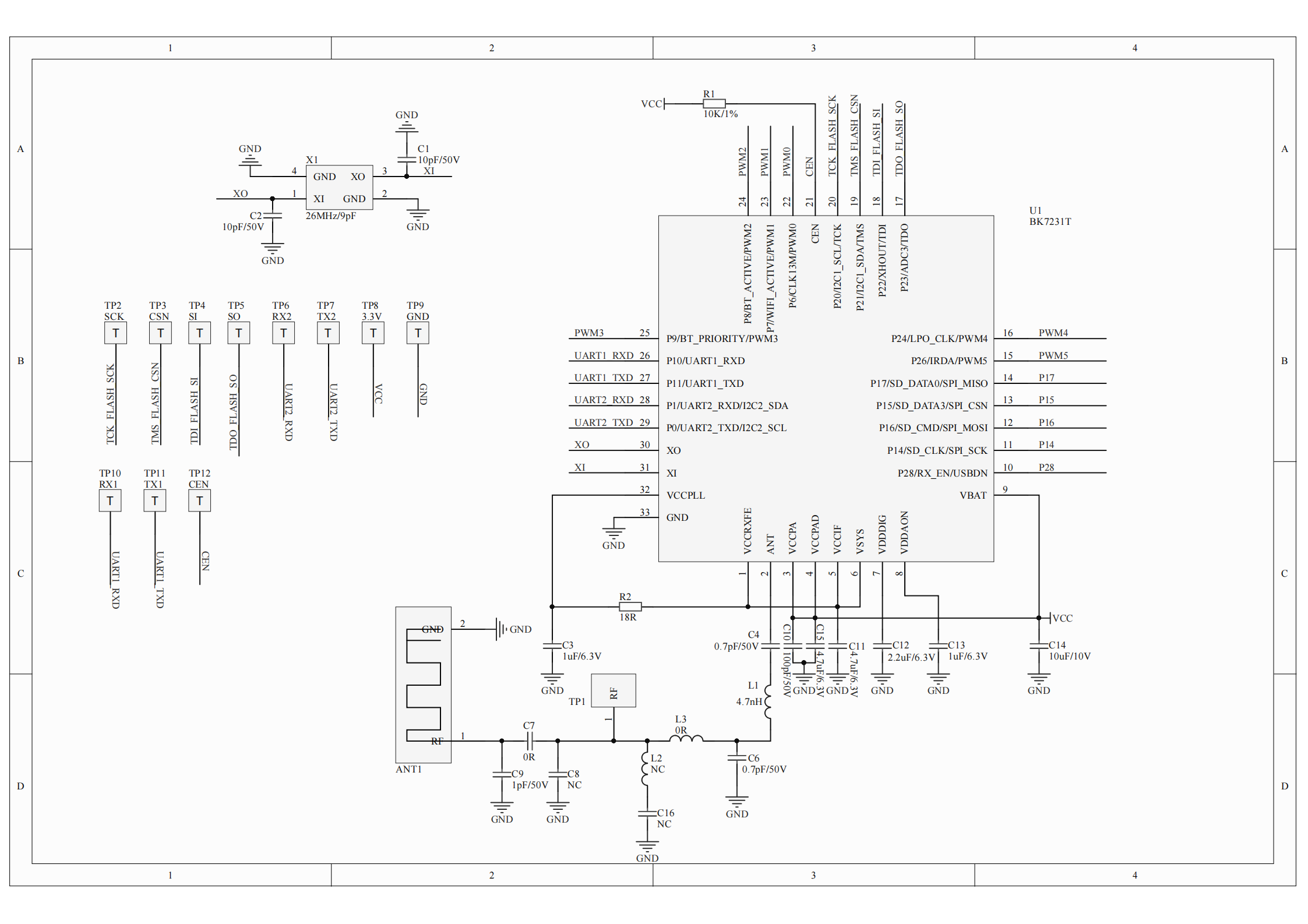
This topic describes hardware design guidelines on development based on the BK7231T Wi-Fi chip.
BK7231T is a highly integrated wireless and radio frequency (RF) chip, with a built-in Wi-Fi protocol stack and various library functions. It features a low-power 32-bit CPU, 1T1R WLAN, 256 kbit static RAM, 2 MB flash, and various peripherals. As a real-time operating system (RTOS), BT7231T integrates all Wi-Fi MAC and TCP/IP libraries. You can develop your own embedded Wi-Fi products.
| Communications | Wi-Fi standard | Rate | Transmitted/received power | Typical value | Unit |
|---|---|---|---|---|---|
| Transmit | 802.11b | 11 Mbit/s | +17 dBm | 220 | mA |
| Transmit | 802.11g | 54 Mbit/s | +14 dBm | 200 | mA |
| Receive | 802.11g | 54 Mbit/s | -10 dBm | 104 | mA |
| Receive | 802.11n | MCS 7 | -10 dBm | 124 | mA |
Note: It is recommended to select a power supply with a steady-state power of ≥ 3.3V/220 mA and the peak current limit of ≥ 400 mA.
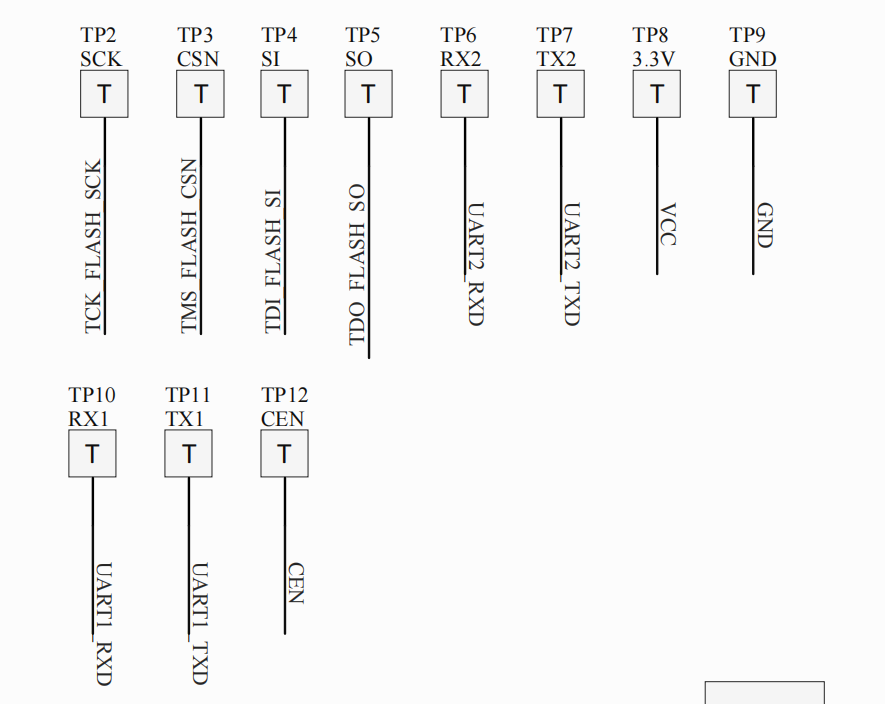
Note:
- The parameters of the matching link and the filter circuit must be obtained by testing your actually used board. The parameters shown in the figure do not apply to the board after re-layout.
- The test points and RF_PAD cannot be tinned during production.
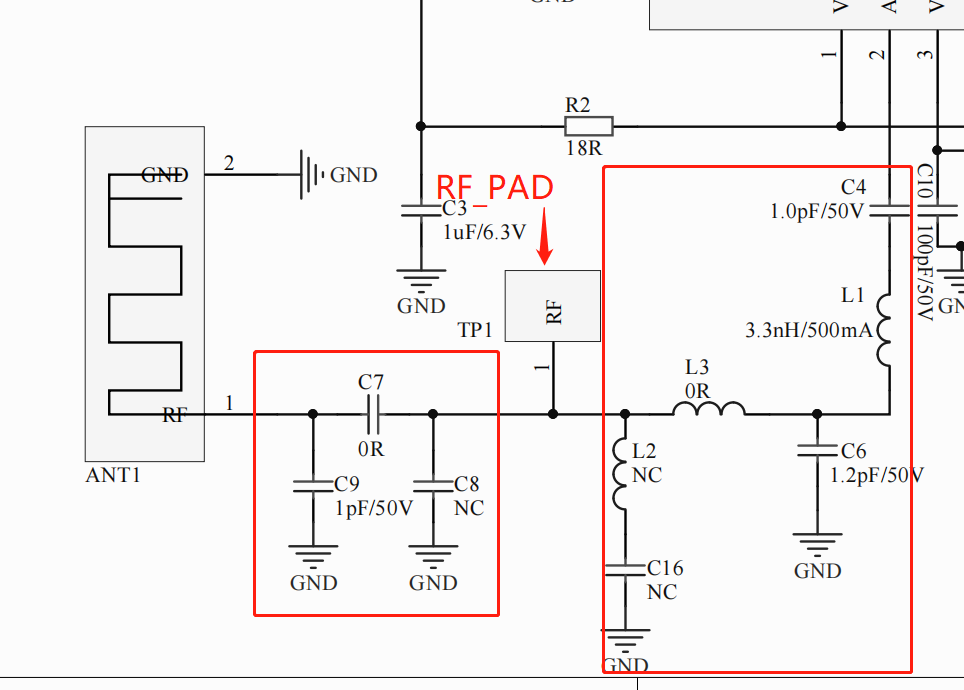
To reduce the signal loss, the RF trace from the RF pin to the antenna should be as short as possible. The characteristic RF impedance must be 50 Ω. The components should be placed as compactly as possible but not too close. The minimum pad-to-pad spacing is 0.3 mm.

Provide two layouts for on-board PCB antennas.
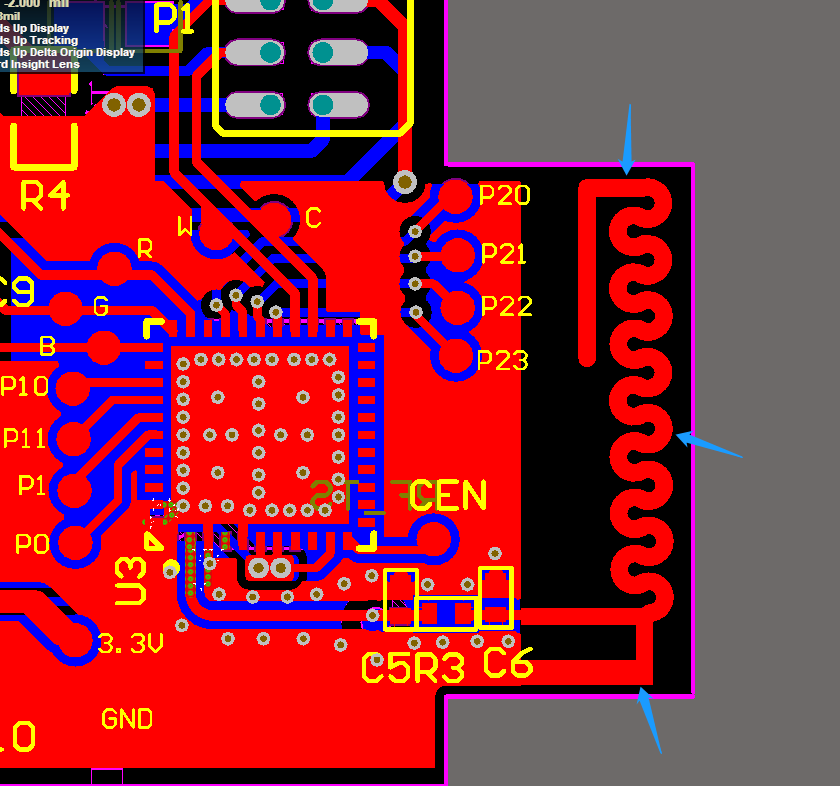
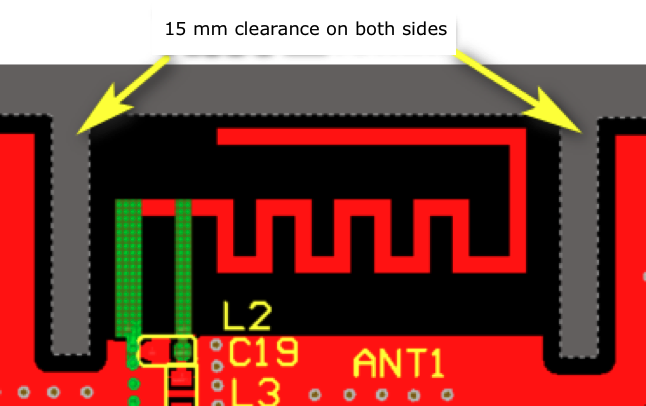
Trace and copper pour are not allowed on the antenna area of each layer.
The trace width from the RF pin to the antenna RF feed point should be routed strictly to 50 Ω RF impedance. The trace width is related to the board thickness and the number of layers. You can refer to the design guideline provided by the PCB board manufacturer. The RF trace should be routed with circular arcs.
The ground plane on the adjacent layer must be complete, which must not be branched.
Trace must not be routed under the RF trace.

Place filter capacitors as close as possible to the pins. The ground pin of the capacitor directly passes through the via to the ground plane.
The surface of the chip and peripheral circuits and the adjacent layer should be filled with copper to create a ground plane.
The RF trace should be surrounded by grounding copper. Anti-interference is achieved through symmetrical vias. The size of the via is 8 mil inner diameter and 16 mil outer diameter. Cover the gaps with ink.

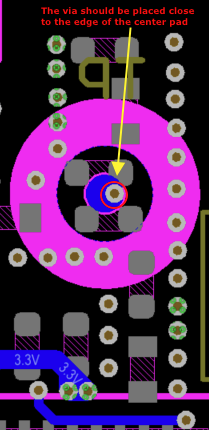
RF_PAD is placed on the bottom layer, between the chip and the antenna matching position. During crimp connection, to avoid damage to vias by the test probe, the via should not be placed on the center of the pad but close to the edge of the center pad.
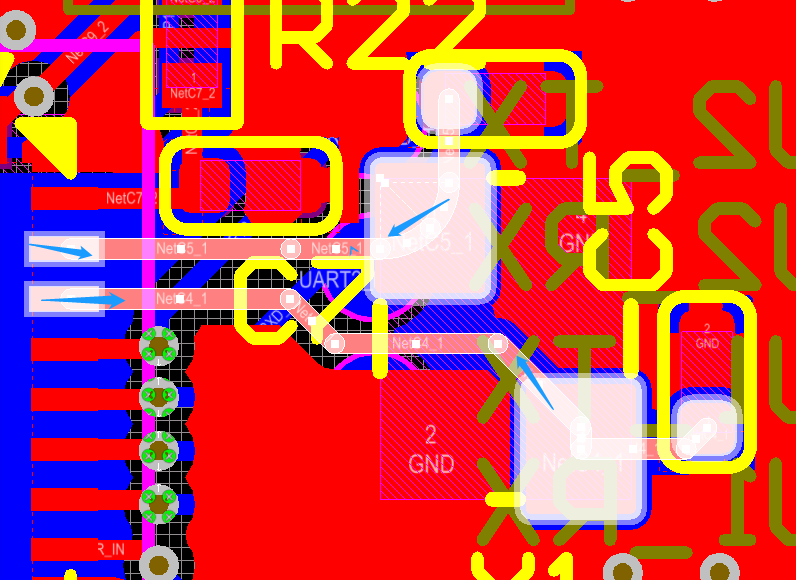
The trace of the crystal oscillator should be as short as possible. To prevent electromagnetic interference (EMI), add ground vias around the crystal oscillator.
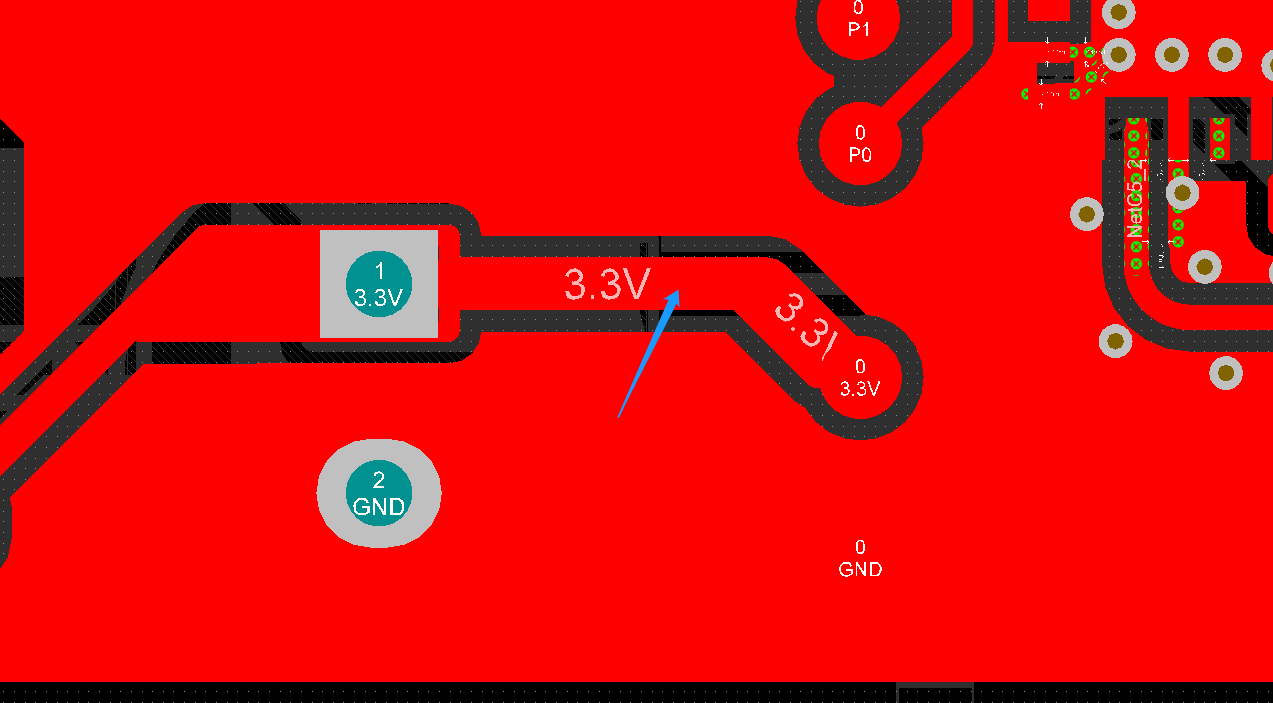
The width of the 3.3V power traces should be no less than 20 mil. There should be at least two vias where the power traces cross layers.
Select an antenna depending on the shape and space constraint of your product. The types of antennas include PCB antennas, electronic antennas, helical antennas, FPC antennas, and ceramic chip antennas.
Note: The area around the antenna should be kept clean.
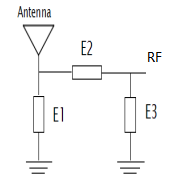
Antenna matching circuit
The antenna matching circuit is shown below.
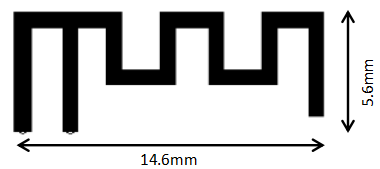
Recommended PCB antenna
Shape A: Meandered inverted-F antenna is the most extensively used antenna.
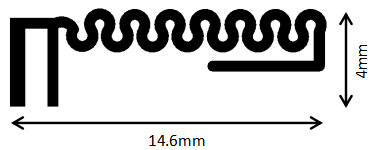
Shape B: The bends of a meandered inverted-F antenna are curved, which take less vertical space while retaining its designed trace length. This shape applies to lights that have height constraints to light panels.
Shape C: Vertical traces are lengthened, and horizontal traces are shortened. This shape applies to products that have horizontal space constraints but no vertical space constraints, such as strip light controllers.
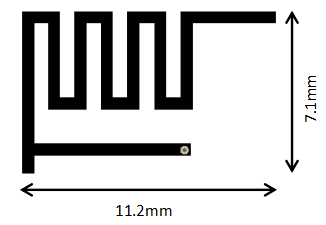
Note: You can request antenna assembly files from Tuya’s account managers.
Other recommended antenna types
If pads or vias are reserved on the board, electronic antennas or helical antennas are recommended.

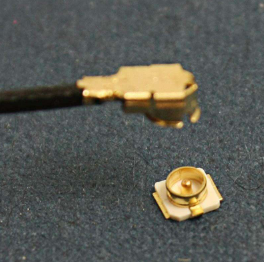
If IPEX antenna mounts are reserved on the board, FPC antennas and external antennas are recommended.
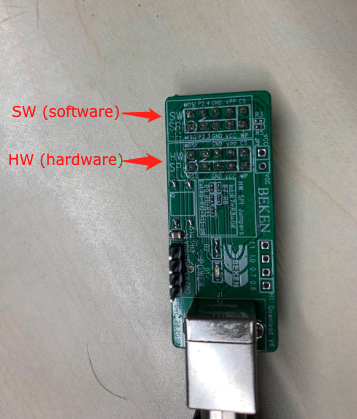
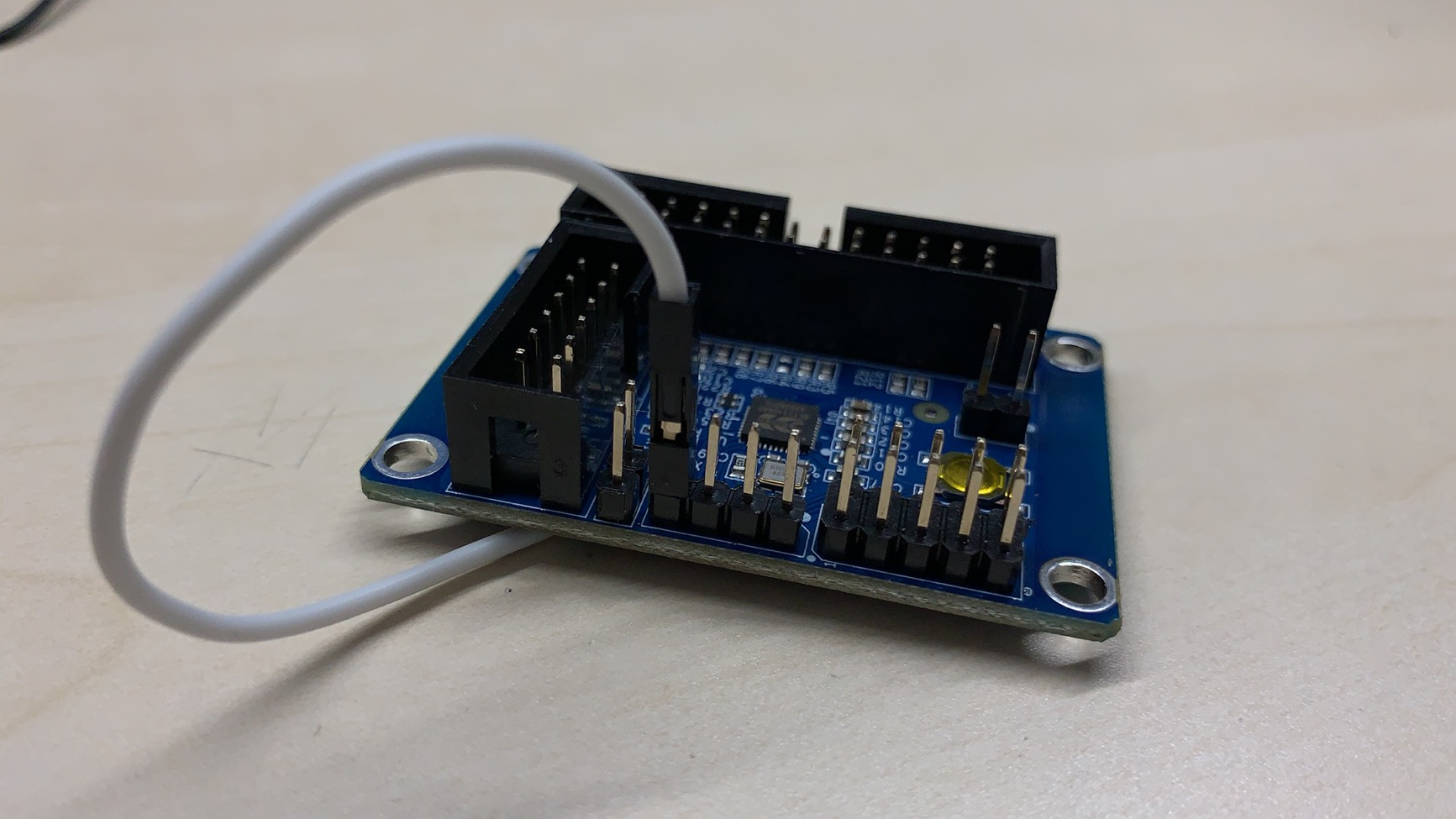
Flash the boot firmware to the backplane.
Insert the USB-SPI board into the backplane in the correct direction, as shown below. Make sure the correct SPI interface is inserted.
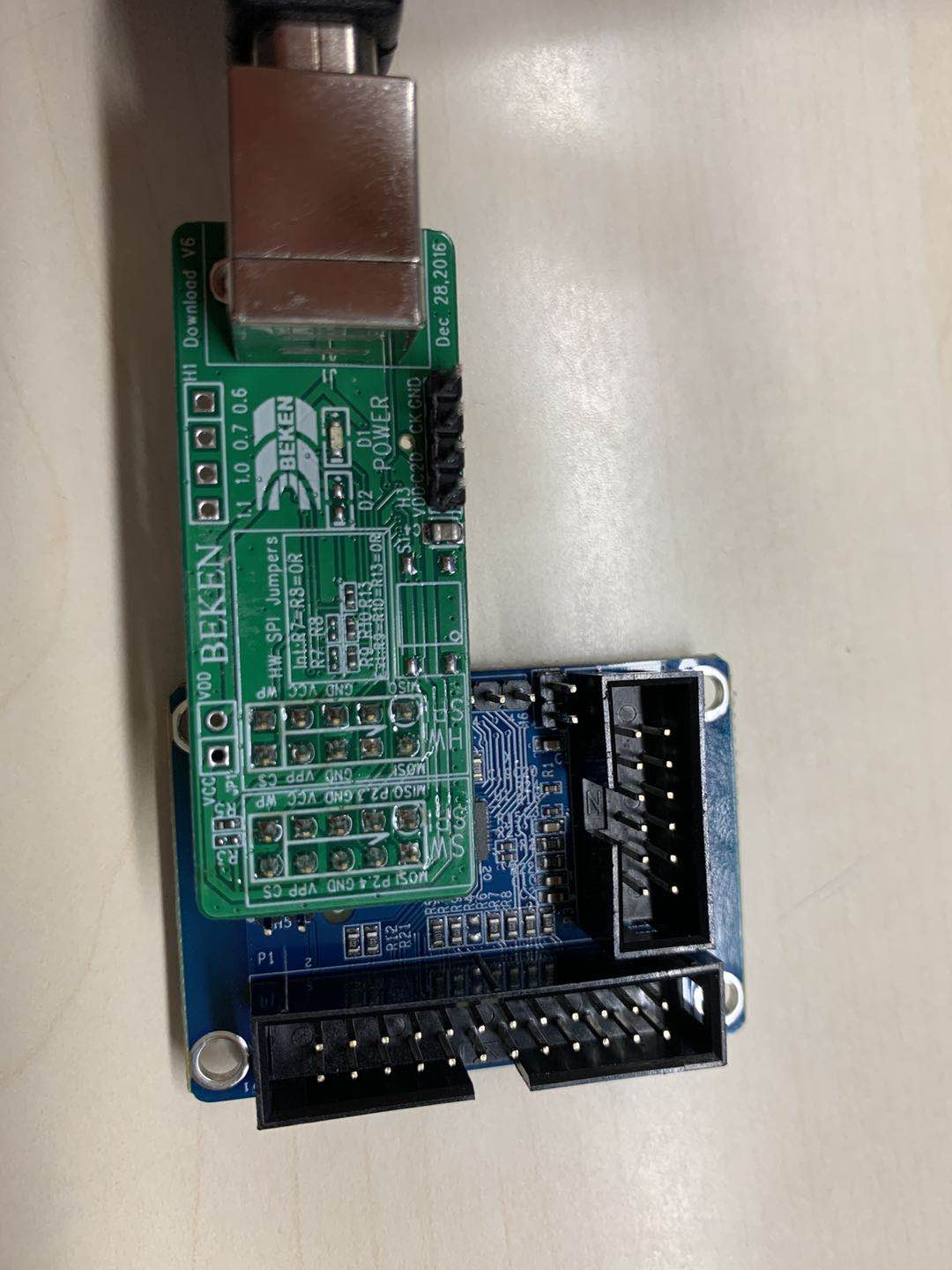
Open the binary file bk_product_rfcal_bk7231s_1.0.5_20200530_2.bin in MXCHIP, select the SPI type, and click Download.
After the download starts, the progress will be displayed on the right side of the software interface.
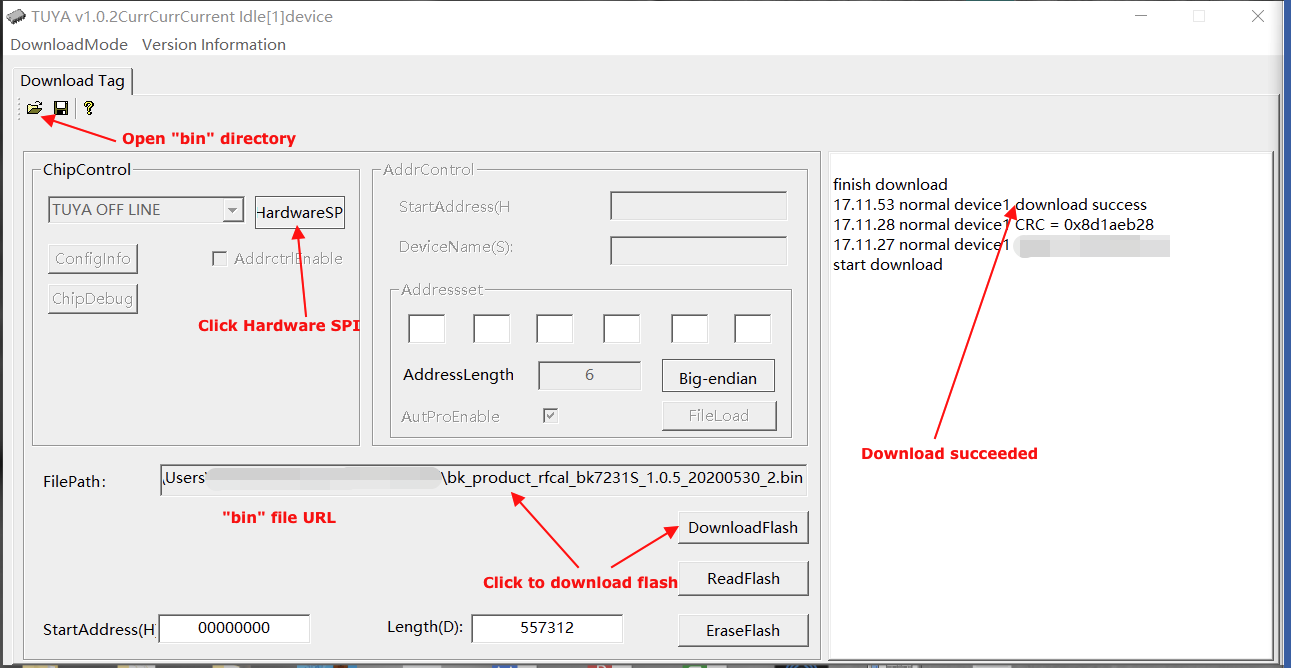
Flash the boot firmware on the backplane to the chip.
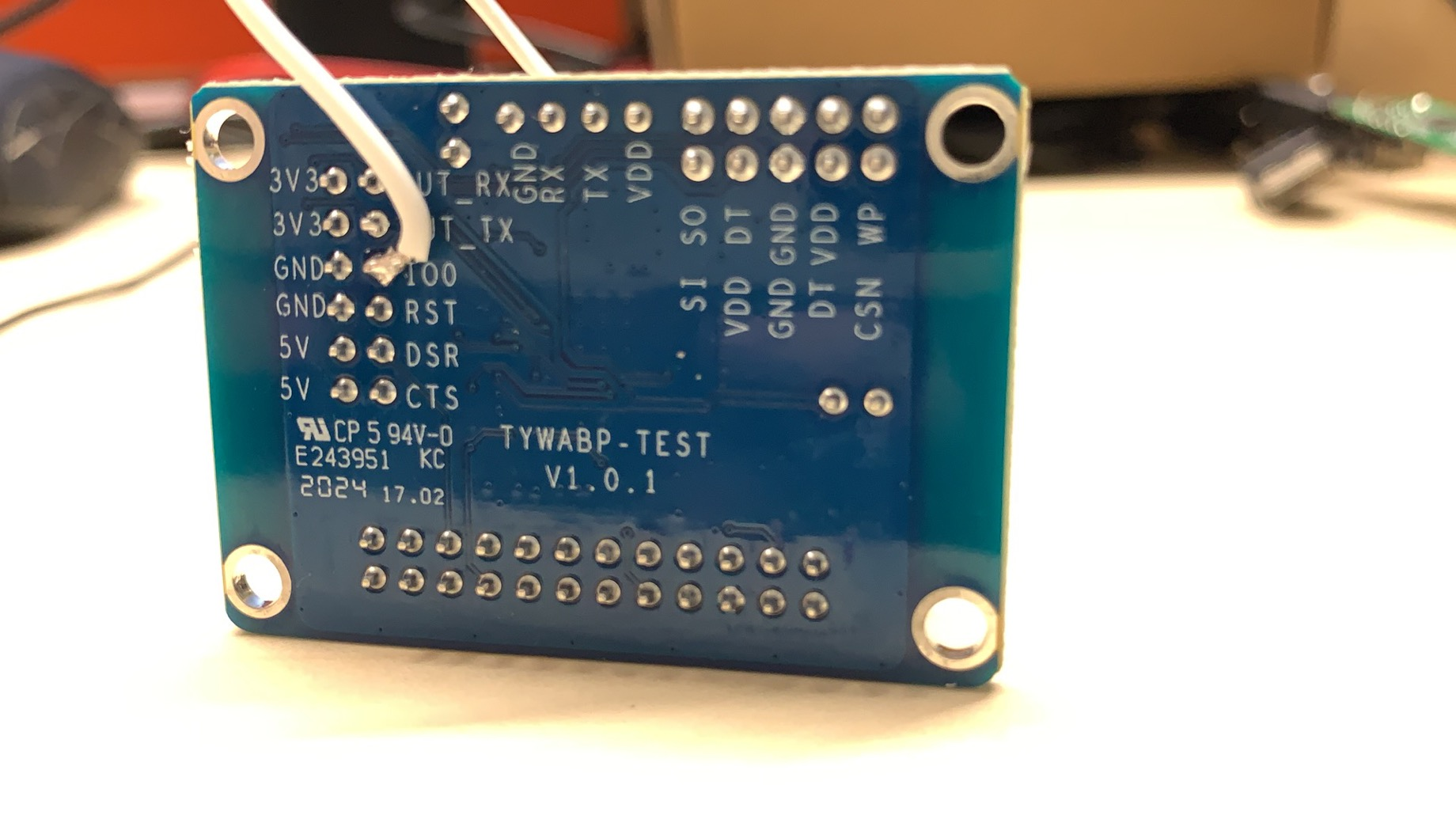
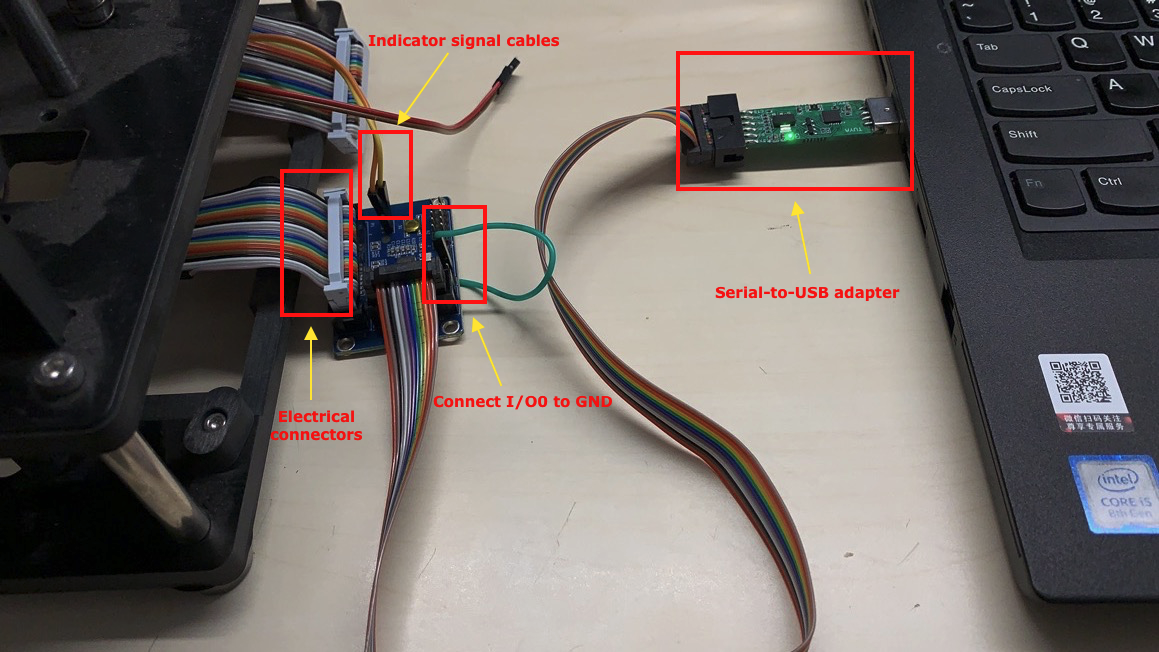
Flash application firmware and authorize module
Connect the test jig in the same manner as step 2 above but disconnect the I/O0 to GND of the backplane. Then, you can start flashing and authorization.
Open the software Cloud Module Burning Authorization Platform. Click File > Set Up and set Burn Baud to 150000 and Test Baud to 9600.
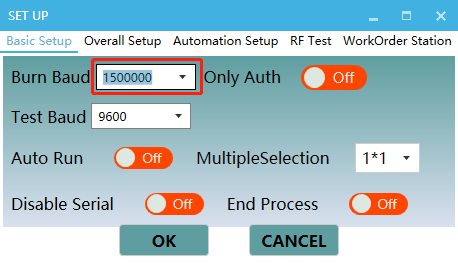
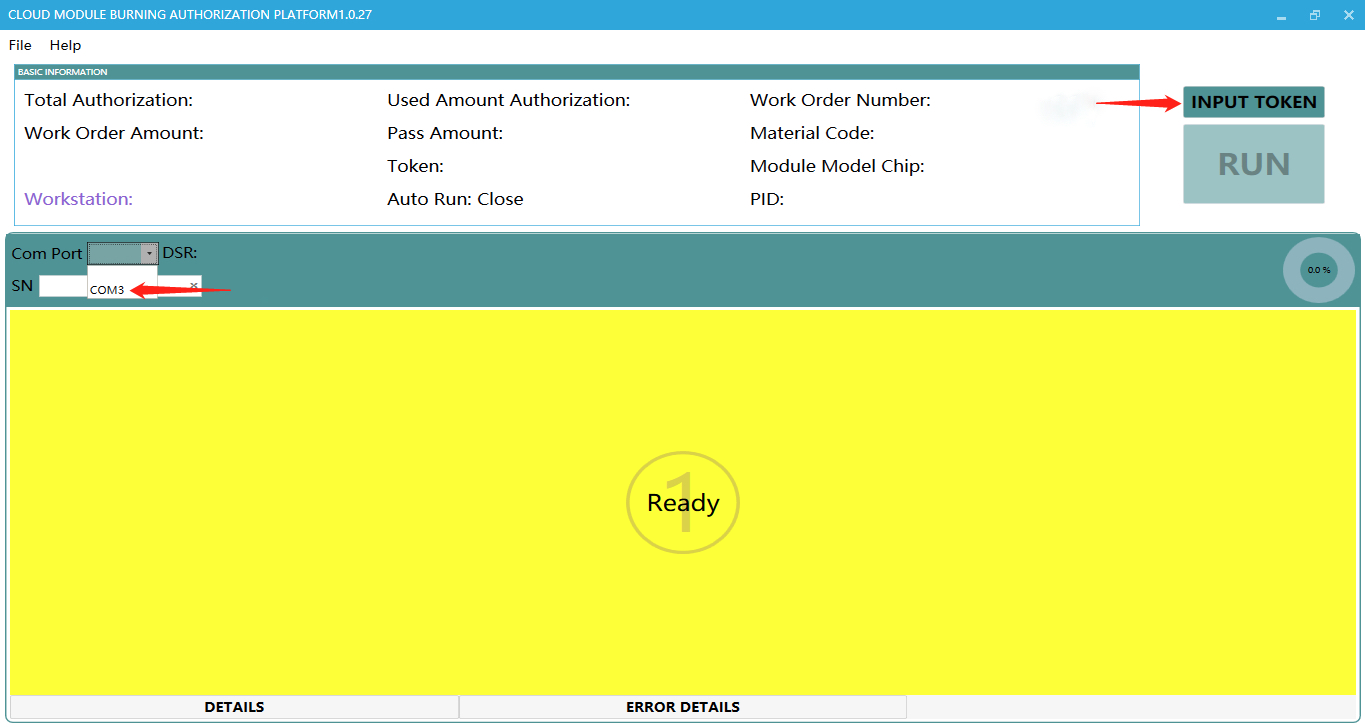
Select the COM port for the connected serial-to-USB adapter. Click Input Token.
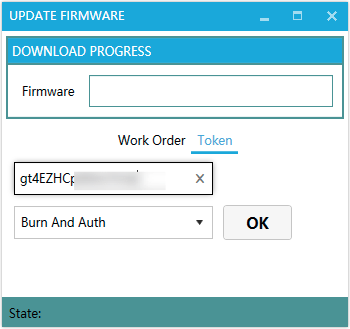
On the Update Firmware dialog box, click Token to enter the authorization code of BK7231T. Select Burn And Auth from the dropdown list and click OK.
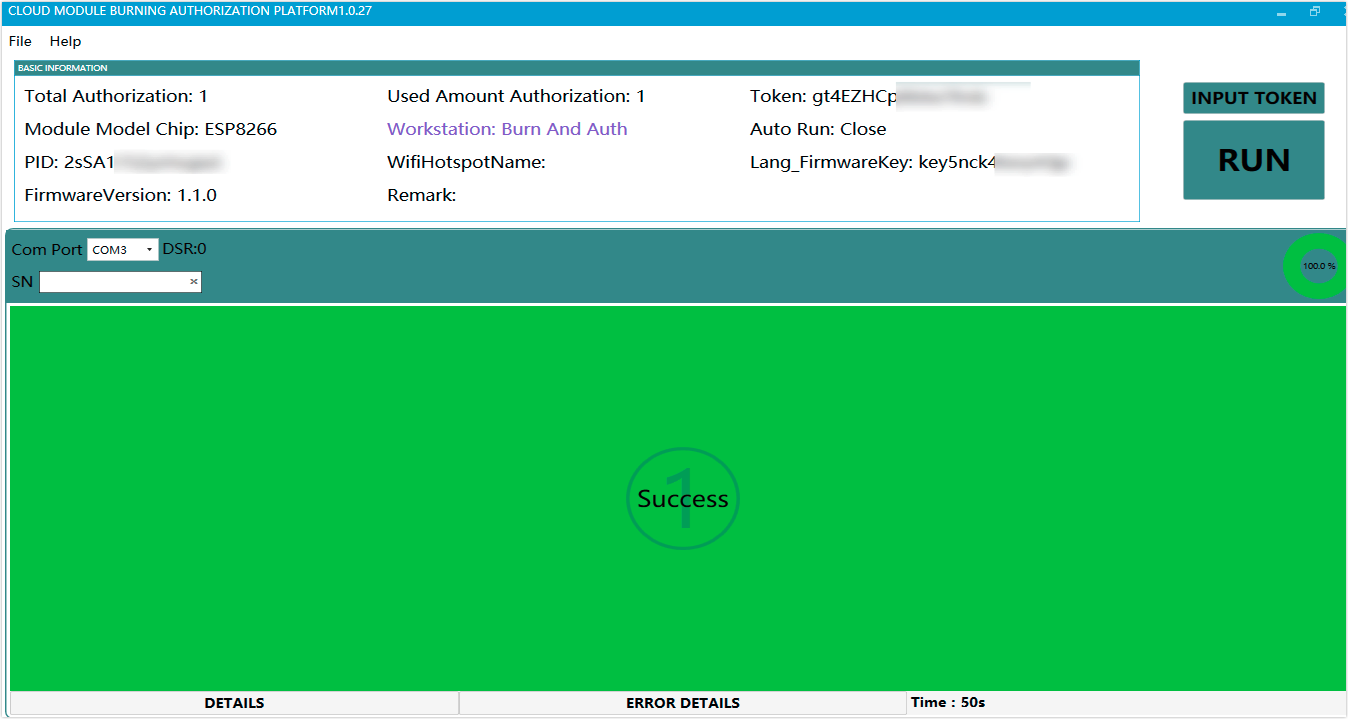
Click Run. When authorization and flashing are completed, the interface shows Success.
Note:
- After the boot firmware is flashed, you can start to test and calibrate the RF performance of BK7231T. Because flashing application firmware will overwrite boot firmware, you should flash boot firmware again in case of testing again.
- The development board and test jig production instructions used in the firmware burning and activation process can be submitted to Tuya BD for requirements. You can request the documents of the development board and test jig from Tuya’s account managers.
- If you use the self-calibration circuitry integrated on BK7231T, apply a 10K ohm resistor from the P28 pin to GND.
The featured self-calibration circuitry integrated on BK7231T modules addresses the needs of tuning without external fixtures and reduces costs.